Britons and language barriers
For many Britons, the idea of ordering dinner in Paris or asking for directions in Rome can feel more intimidating than the journey itself. With 77% of Britons actively learning local phrases before they travel, it's clear we recognise the importance of language, yet many still find speaking those phrases abroad daunting.
)
Indulge your love of travel
Be the first to get exclusive early discounts, the latest news and travel inspiration. Unsubscribe anytime. Privacy policy
To understand how travellers navigate language barriers, a survey of 2,000 Britons was conducted. In addition, Google search data from the past 12 months was analysed to identify the most-searched languages in Europe and worldwide, as well as the most-searched language-related phrases.
Alison Porter, Product Manager at Saga Holidays, provided her insights and tips on how learning a few phrases can transform your travels and help you navigate your way through a different country.
Alison says
"Learning even a handful of local phrases before you travel is one of the simplest ways to travel more authentically. It is not just about communication; it is about showing respect and openness to another culture. Travellers who make the effort to say, 'good morning' or 'thank you' in the local language can receive a completely different experience."
1 block in clipboard
The languages Britons are most eager to learn
The Google search data revealed which languages Britons are turning to most, with European languages dominating, reflecting our favourite travel destinations.
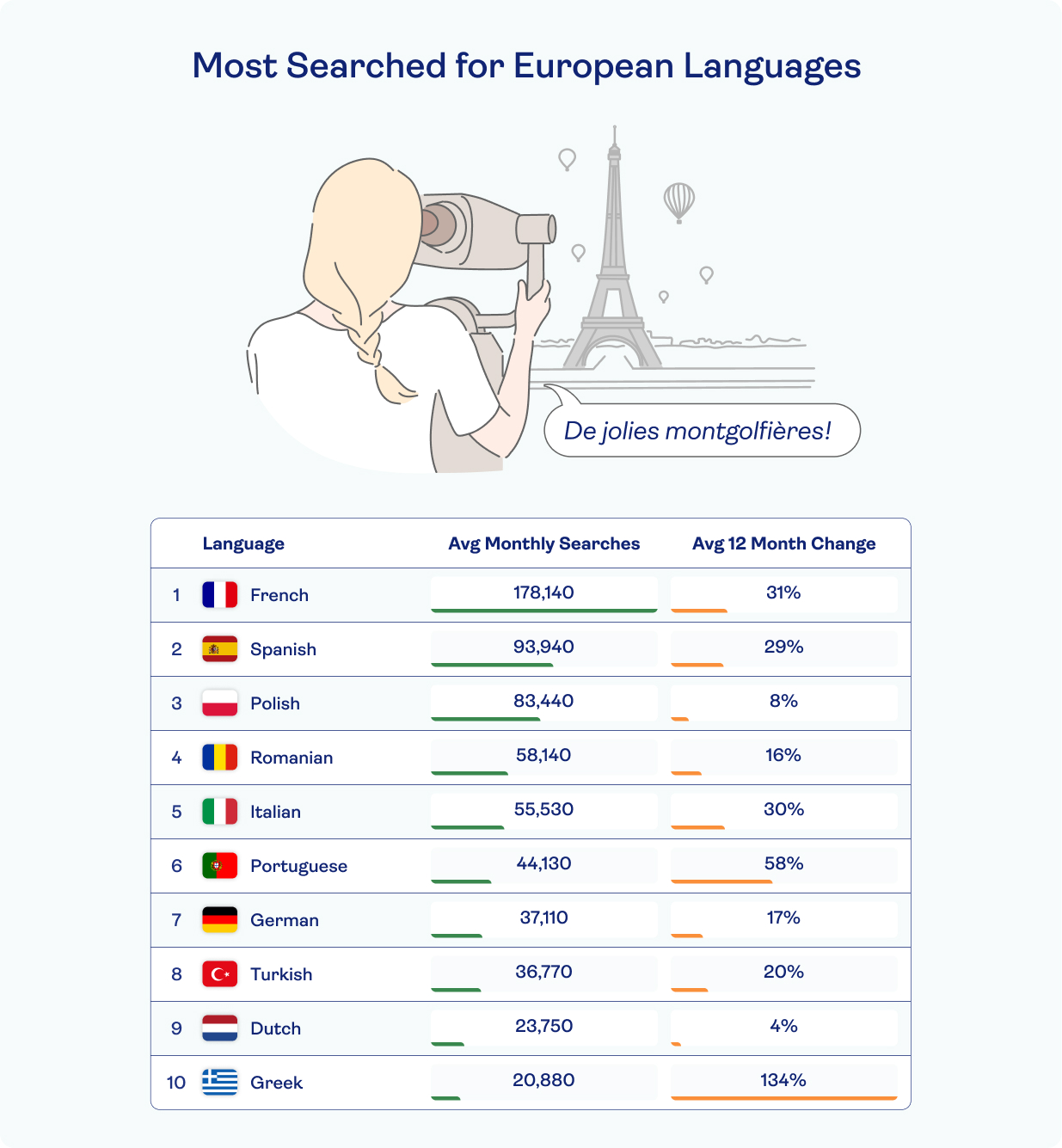
Our data found that French is the language that Britons search for most, with 178,140 searches and a 31% increase over the past year.
Spanish follows with 93,940 searches and a 29% increase; the Polish language had 83,440 searches with an 8% increase, whilst Romanian (58,140 searches, up 16%) and Italian (55,530 searches, up 30%) also feature prominently. Yet, it is Greek that has seen the most significant increase at 134% followed by Portuguese at 58%.
The German language had 37,110 monthly searches, followed by Turkish (36,770) and Dutch (23,750), highlighting the most popular European languages.
Alison says
"These figures reflect the destinations British holidaymakers love most. France, Spain, Italy, and Portugal remain perennial favourites, so, naturally, these languages top the list. What's interesting is the diversity; we're seeing people venture to Romania, Poland, and Turkey, places where English isn't as widely spoken, so learning a few phrases becomes even more valuable."
Popular interest in global languages
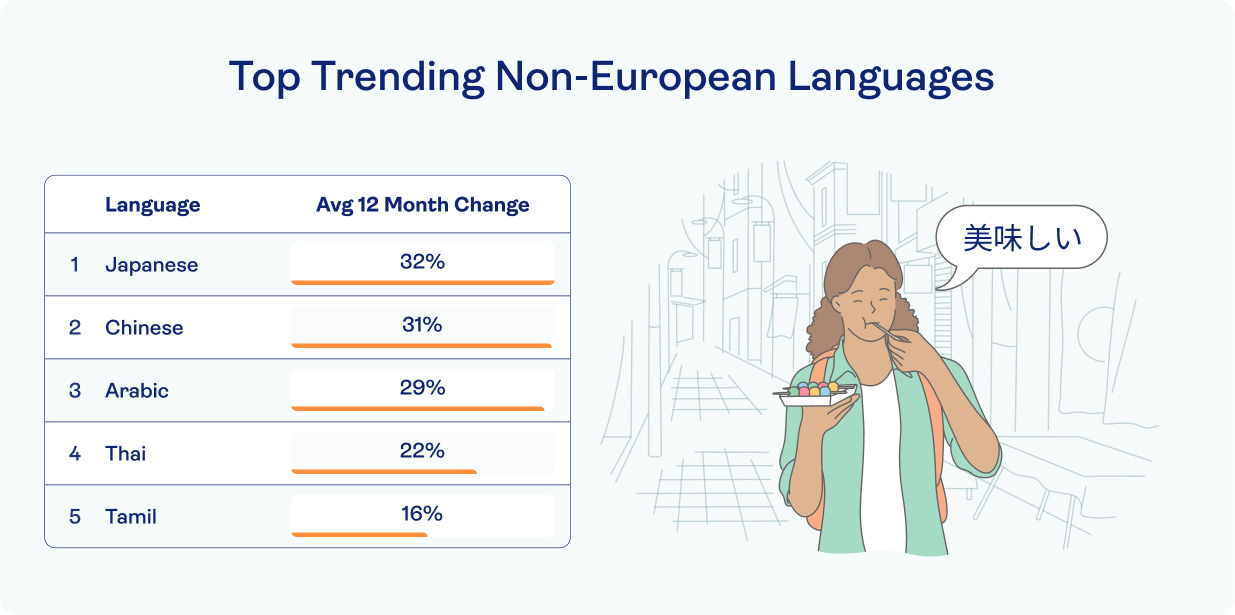
The most searched-for non-European languages reveal our growing appetite for global adventure, with Japanese leading (up 32%), followed by Chinese (up 31%), Arabic (up 29%), Thai (up 22%), and Tamil (up 16%).
Alison says
"Japan has become incredibly popular with British travellers in recent years, and whilst many Japanese people in tourist areas speak some English, knowing basic phrases like 'arigato' (thank you) and 'sumimasen' (excuse me) shows cultural respect – something highly valued in Japanese society."
1 block in clipboard
The fastest-growing languages across the world
Whilst the French and Spanish languages dominate overall search volumes, it is the lesser-known languages showing the most dramatic search increase, revealing where adventurous Britons are now choosing to explore.
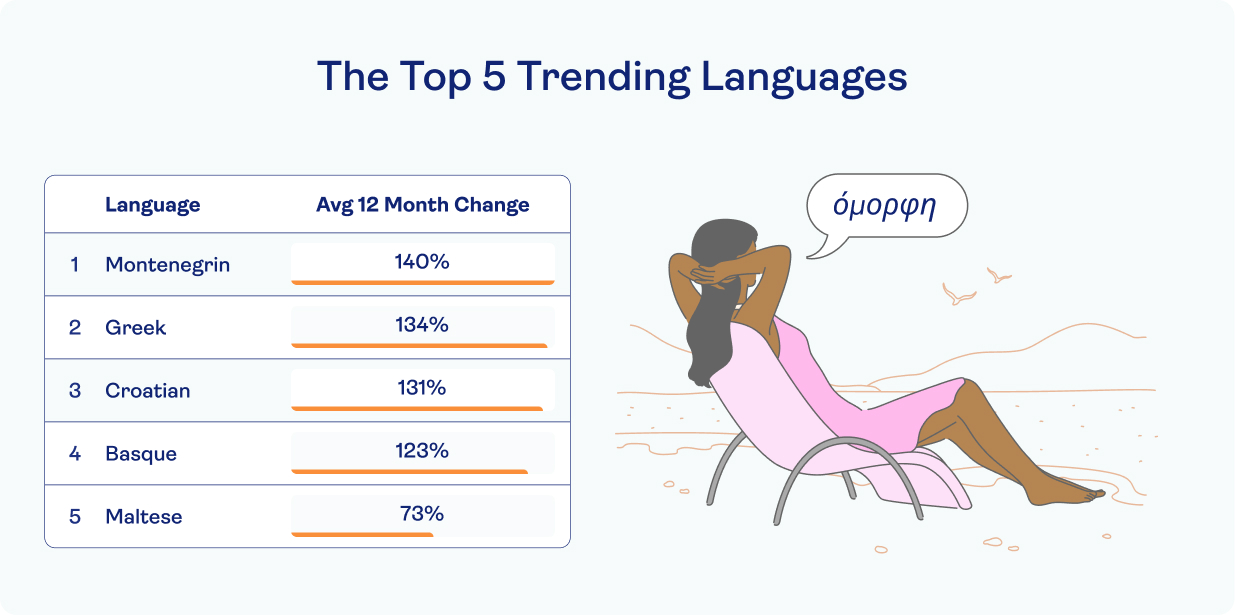
Travellers are moving beyond the well-trodden tourist trails and seeking out authentic experiences in places like Montenegro (searches up 140%), which is becoming a popular travel destination as part of a social media craze for 'Destination Dupes'. Croatia (searches up 131%), the Balkans (searches up 123%) and Malta (searches up 73%) have also seen interest.
Alison says:
"These destinations often have fewer English speakers outside major cities, so having even basic local phrases is incredibly helpful. A quick hack is to screenshot a mini phrase sheet on your phone before you set off, so you can pull it up instantly even when you are offline."
What phrases are Britons searching for the most?
When it comes to the essentials, Britons are remarkably practical. We combined key language-related phrases across all languages to reveal the most searched.
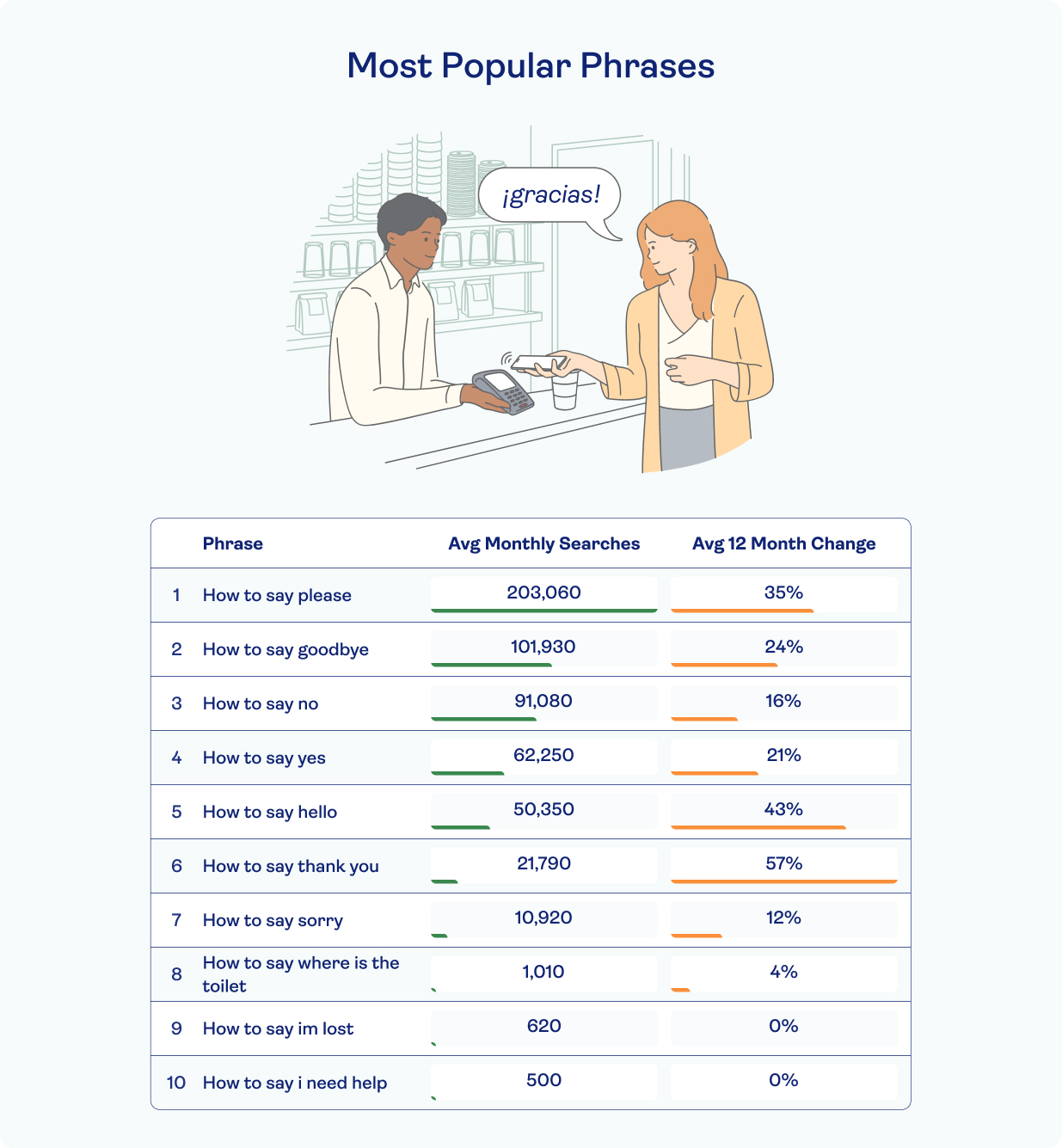
"How to say please" came out on top with 203,060 monthly searches – a 35% increase over the past year. For 55% of Britons, polite greetings are the most important types of phrases to learn before travelling.
Yet, it is the emergency phrases that reveal our travel anxieties, with Britons searching for "how to say where is the toilet" (1,010 searches), "how to say I'm lost" (620 searches), and "how to say I need help" (500 searches). In fact, 22% of Britons prioritise directions and emergency terms when learning the local language.
Alison says
"If you're only going to learn five phrases, make them hello, please, thank you, 'can you help me find...', and 'where is...?'. With just these, you can navigate most everyday situations. Emergency phrases may be lesser known but knowing how to ask for help or indicate that you're lost can be important for safety and peace of mind."
"In health-related emergencies, something I recommend is if guests have a dietary requirement or medical need, they pre-prepare a note to explain what they need. This is imperative for coeliac, diabetic or guests with a severe allergy, who need to ensure they are eating the right food to avoid a medical emergency."
The biggest barriers preventing Britons from learning phrases before going abroad
The survey revealed the main obstacles stopping Britons from learning a few phrases before they travel.
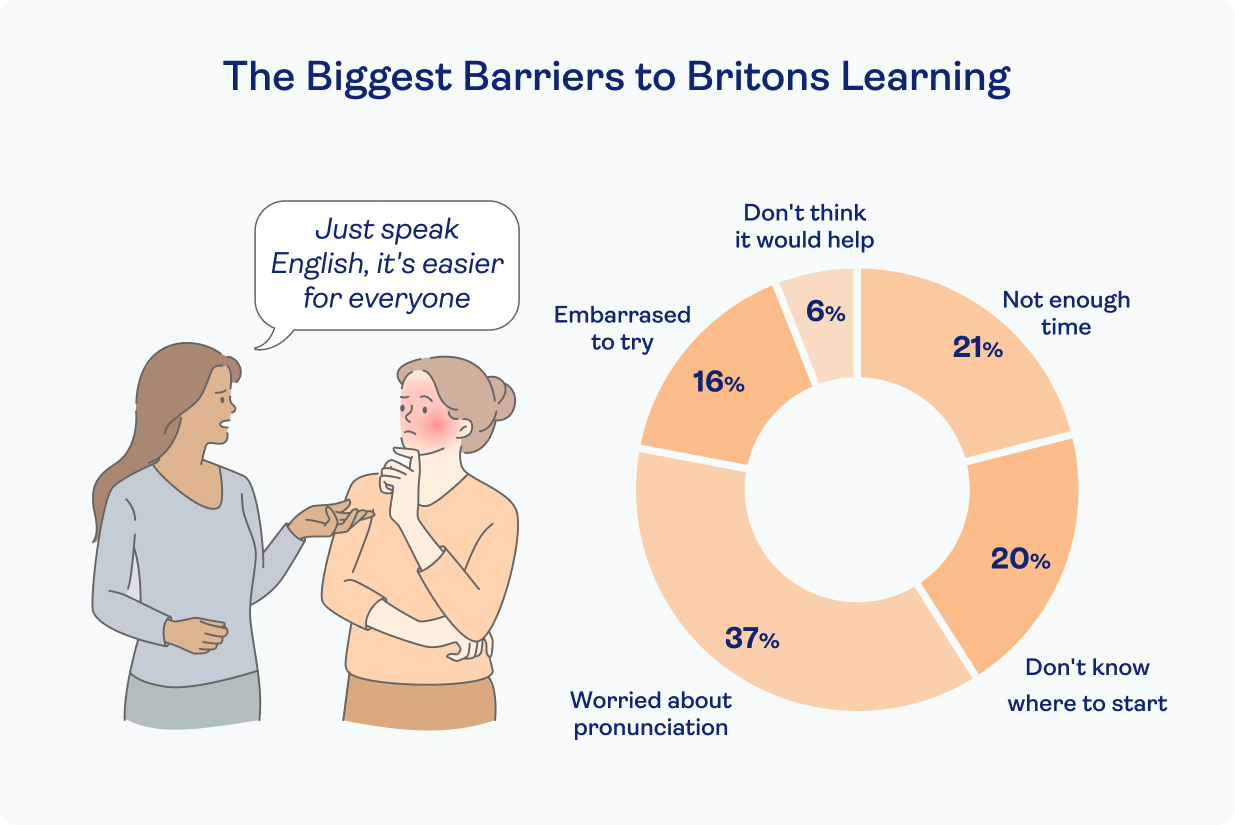
For 21% of Britons, time is a barrier to learning some phrases.
Alison says
"If you dedicate just 15 minutes to learning five key phrases using a language app or Google Translate, that can be enough to make a difference."
Similarly, 37% of Britons are worried about pronunciation;
Alison says
"Practice saying some catch phrases out loud at home before you travel, to build your confidence."
And with 16% of Britons embarrassed to translate,
Alison says
"Start with low-pressure situations like saying 'hello' at hotel check-in or 'thank you' in a shop. You'll quickly see people respond with warmth, not judgment, and that first positive reaction will boost your confidence immediately."
Language-related travel difficulties faced by Britons
The survey also revealed the situations where Britons have struggled most with language barriers abroad.
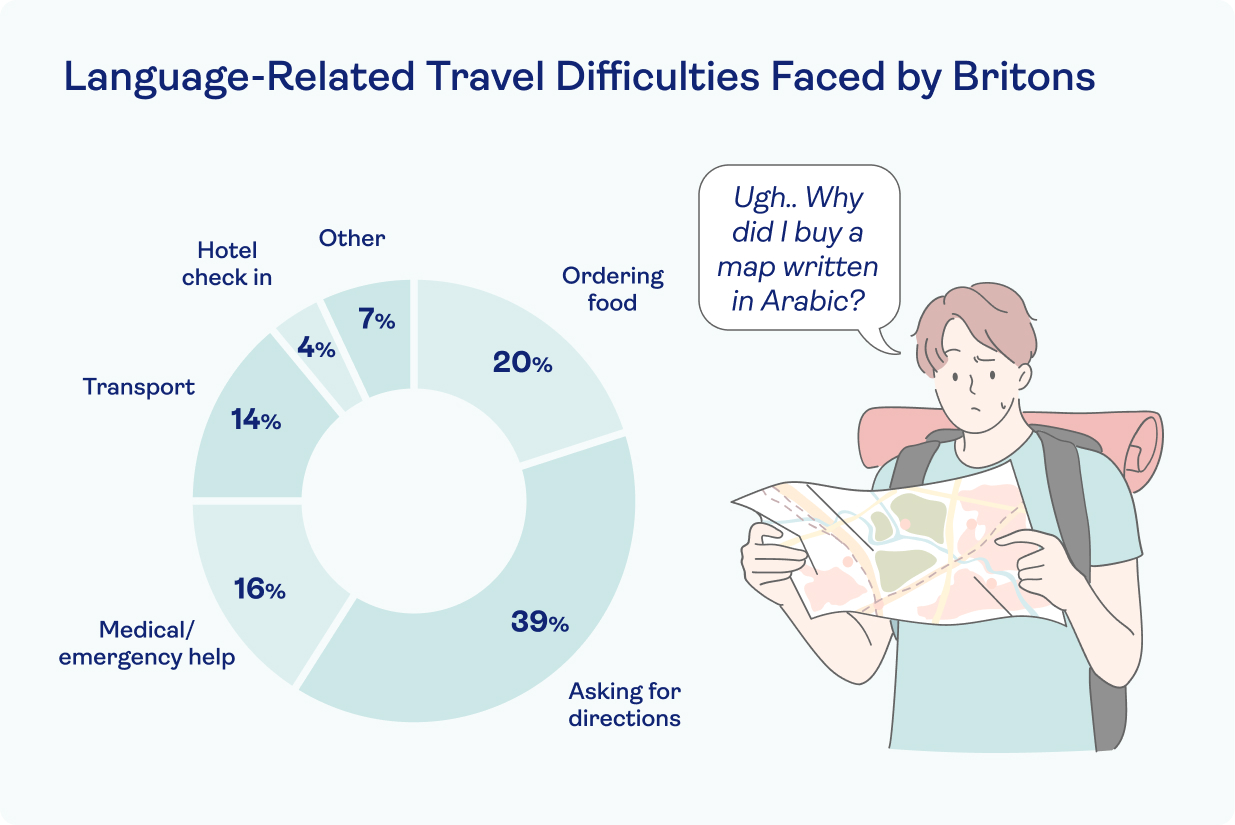
Alison says
"These are the scenarios that cause the most anxiety, but they're also the most manageable with a bit of preparation. Many restaurants in tourist areas have picture menus or English translations when you're ordering food, but if not, don't be shy about pointing or asking, 'what do you recommend?', even in broken language. For directions, having your destination written down or saved on your phone means you can simply show it to people. Google Maps has become a lifesaver for transport navigation."
How Britons benefit from learning local phrases
According to the survey, 88% of Britons believe learning some phrases enhances their travel experience. We also asked them about the multiple advantages they have experienced from learning even basic local phrases.
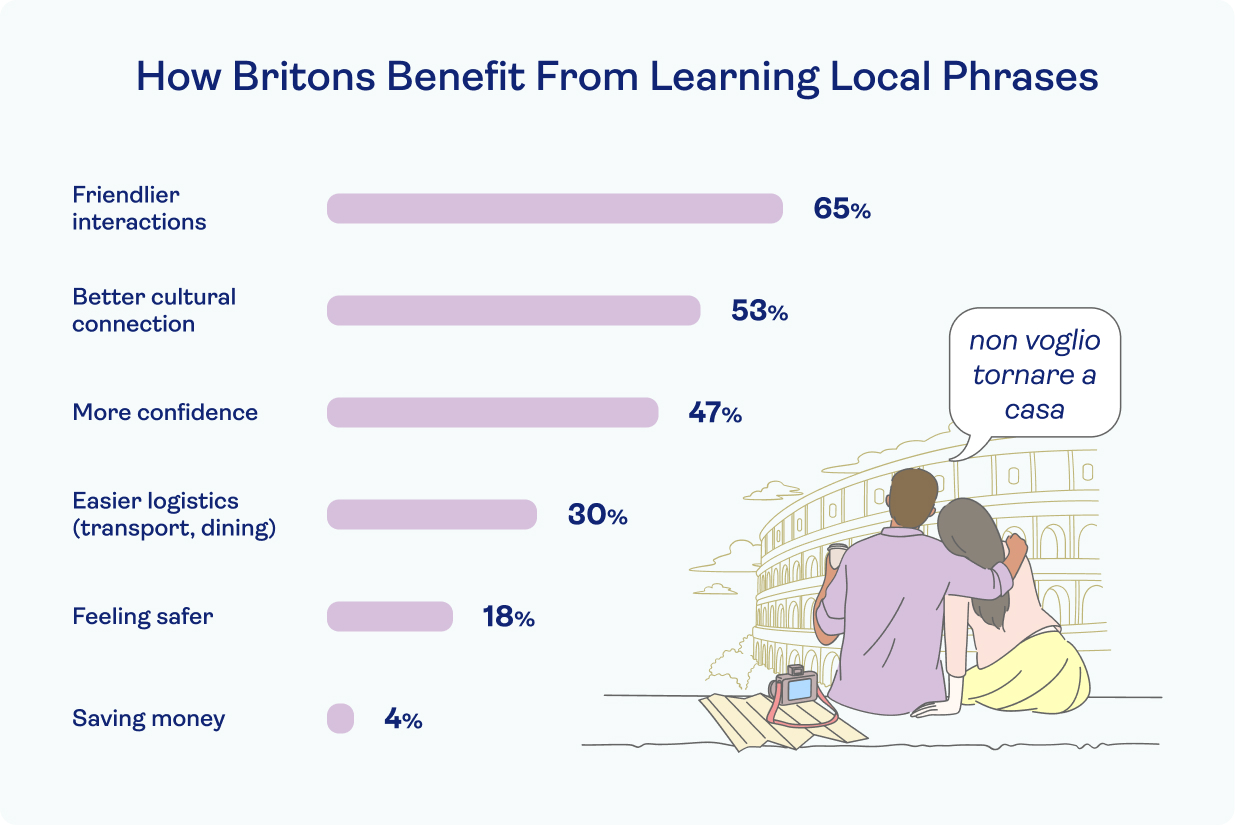
The survey shows that Britons experienced friendlier interactions (65%) when communicating with locals in their native language.
When having some key phrases to hand, they also reported experiencing better cultural connection (53%), greater confidence abroad (47%), and feeling better prepared to navigate their surroundings (30%) when armed with key phrases.
Interestingly, a small pool of Britons said saving money was an advantage.
Alison says
"The 'saving money' benefit might surprise people, but it is true. When you show respect by speaking some local language, you are more likely to get genuine recommendations rather than tourist prices. Market vendors may offer better deals and restaurant owners could suggest the daily special rather than the expensive tourist menu, all because someone made the effort to say 'hello' and 'thank you' in the local tongue."
Practical hacks when you cannot speak the language
Alison shares her top five tips for navigating language barriers.
Download Google Translate with offline mode - Use the camera function to translate signs and menus when you are out and about.
Master non-verbal communication - A smile, a friendly gesture, or a point can help you order meals, buy tickets, and navigate cities without saying a word.
Learn to recognise key words visually - Before you travel, familiarise yourself with words like 'entrance,' 'exit,' 'toilet,' 'open,' 'closed,' and 'danger' in the local language.
Do not be afraid to ask for help - Locals appreciate it when you try to communicate and may go out of their way to assist you or find someone who speaks English.
Keep visual aids on your phone - Save photos of your hotel, essential medications, or destinations to show people when words fail.
References
Methodology
Google search data from the past 12 months was analysed using Google Keyword Planner to identify the most searched-for European and non-European languages, tracking their average monthly search volumes and year-on-year percentage changes. Searches for key language-related phrases (such as ‘how to say please’ and ‘how to say thank you’) were also examined to understand which expressions Britons prioritise when preparing for travel.
Two separate surveys of 1,000 UK respondents each were conducted in December 2025.
Expert commentary was provided by Alison Porter, Product Manager at Saga Holidays, offering practical insights and advice for navigating language barriers abroad.
Recent articles
Published
)
Important information
§Travel insurance is underwritten by Astrenska Insurance Limited, subject to medical screening. A price reduction will be applied if the included travel insurance is not required. Pre-departure cancellation cover (cancellation rights) is provided by Saga and is only available when taking out the included insurance. Read more